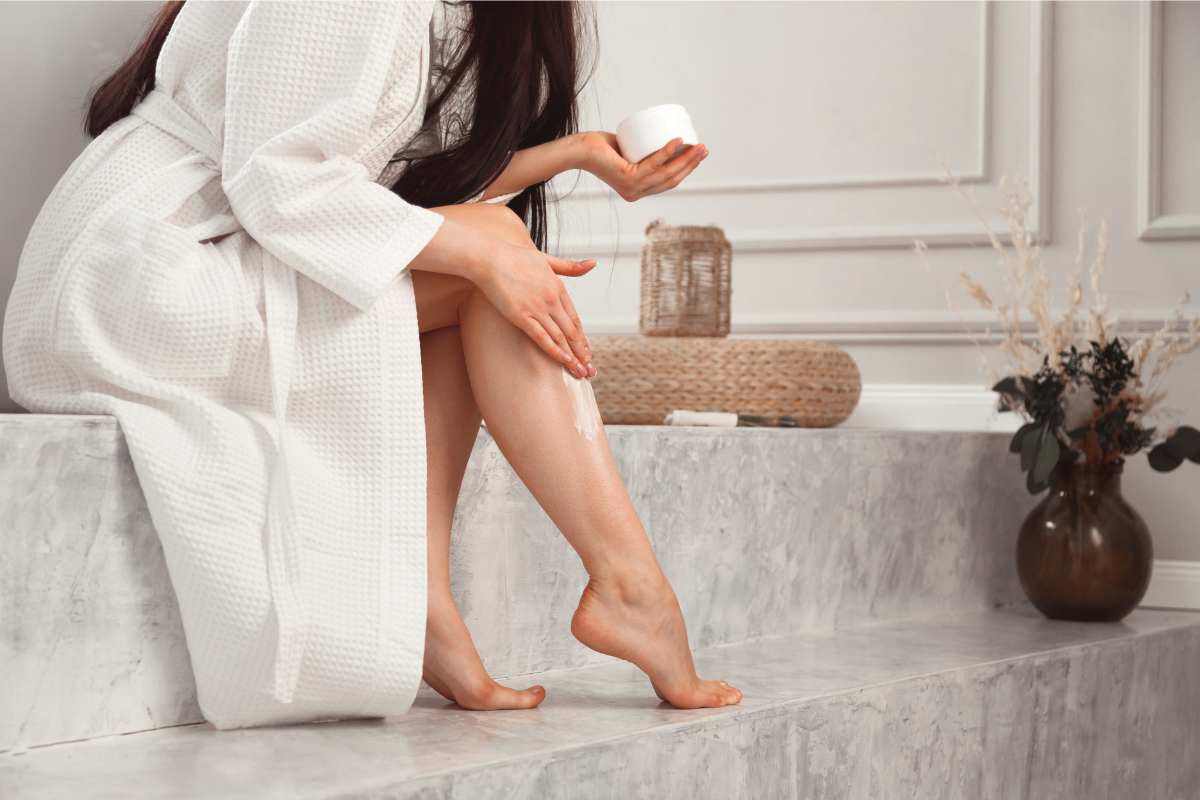
Body care often follows what is visible. In summer, routines feel easier to maintain because skin is more exposed. Moisturiser is applied more regularly, treatment products are used more consistently, and changes in skin texture feel more noticeable. Winter shifts that pattern almost immediately. Skin is covered up under layers, routines are shorter because we’re more rushed, and body care gradually moves lower down the priority list. It’s the season of quickly dabbing on some moisturiser because the bathroom is cold, skipping body care most days because no one is “seeing” your skin anyway, and telling yourself you’ll become more consistent closer to summer. What makes this important is that your skin’s biology doesn’t slow down simply because your attention to it does. Collagen production, hydration balance, circulation, and structural support continue responding to the environment throughout winter, even when the changes are less visible on the surface. Winter Often Creates the Illusion That Nothing Is Changing One of the most frustrating parts of body care is how gradual the process feels. Unlike facial skincare, where changes are often noticed quickly, improvements in skin firmness and texture take their time to develop. This becomes even more difficult during winter, when the skin is less exposed and less frequently observed – out of sight, out of mind is the skin’s worst enemy. During winter, routines become inconsistent without any of us fully realising it. A stretch mark and cellulite cream gets applied “when remembered.” Hydration becomes an occasional step instead of a structured one. Small gaps in consistency all start adding up over time. And because these interruptions don’t create immediate visible setbacks, it becomes easy to assume they simply don’t matter. But skin responds to repeated input, not occasional effort. Structural Changes Happen Quietly Beneath the Surface Stretch marks and cellulite aren’t surface concerns. They reflect deeper structural processes within the dermis, where collagen and elastin fibres maintain the skin’s integrity and resilience. During the colder months, circulation often becomes less active, hydration levels fluctuate more easily, and the skin barrier becomes increasingly vulnerable to dryness. This creates a subtle but important shift: the skin’s repair processes become less efficient when support is inconsistent. What often looks like “stagnant progress” is actually interrupted signalling. The skin hasn’t stopped responding. It just hasn’t been receiving enough consistent reinforcement to continue adapting. This is why using a stretch mark and cellulite cream consistently matters more than applying large amounts sporadically. The Cycle of Starting Strong, Then Stopping Many winter body care routines start with good intentions. Products are purchased, routines are carefully planned out, and motivation feels high and bright at the start of the season. Then real life takes over. Cold mornings shorten routines. Long workdays create lingering fatigue. Hydration decreases without much thought, and one skipped evening becomes two, then gradually the routine becomes occasional rather than structured. This isn’t usually a lack of discipline. It’s often a misunderstanding of how the skin’s changes actually happen. Body care becomes frustrating because skin changes are measured emotionally, while skin repair happens biologically. Why Winter Body Care Often Feels “Ineffective” What Usually Happens What the Skin Actually Needs Products are inconsistently applied Repeated collagen stimulation over time Expecting visible change within weeks Gradual structural reinforcement Stopping once progress feels “slow” Ongoing signalling and hydration support Increasing intensity when results stall Consistency that the skin can respond to Treating body care as seasonal Supporting skin year-round The frustration is understandable and relatable. Skin changes gradually enough that inconsistency rarely feels noticeable in the moment, until progress stalls months later. Body care works cumulatively. The skin builds on repeated signals over time, which means inconsistency interrupts momentum long before visible results have had the chance to appear. Skin structure is built through repetition, not urgency. Why Intensity Could Never Replace Consistency It’s natural to believe that stronger treatments or occasional intensive routines will compensate for an inconsistent body care routine. Skin rarely responds to intensity the way we want it to. What our skin and its processes respond to is repetition, reinforcement, and consistency. Collagen stimulation depends on repetition Hydration support depends on continuity Circulation improves through ongoing movement and reinforcement This is where many people unintentionally work against their skin’s own progress. A stretch mark and cellulite cream used once every few days or weeks can’t reinforce structural adaptation in the same way a consistent routine can. The skin needs repeated communication before it can fully respond to a signal. Winter Is Actually the Best Time to Build Momentum Ironically, winter creates the ideal conditions for body care consistency. Less UV exposure, fewer environmental fluctuations, and more predictable daily routines. This creates a controlled environment where your skin can focus more effectively on repair and reinforcement processes. By the time summer arrives and skin becomes more visible again, most people are trying to rush results that actually need winter consistency to develop. As explored in the science of skin firmness, long-term improvements in skin texture rely on supporting the skin’s structure, rather than reacting only when changes become more visible. Circulation Support Changes More Than We Realise Microcirculation plays a significant role in how effectively the skin receives nutrients, oxygen, and hydration support. This is why massage application techniques, movement, and regular hydration all contribute to skin firmness over time. A formulation like BioMedical Emporium’s Q10 Tissue Oil supports elasticity and hydration while helping to reinforce the skin barrier during colder months. The improvement people notice first isn’t a dramatic visual change, but felt in how the skin feels. The roughness around the thighs softens, and the skin feels less “tight” after a shower. The texture starts feeling more supported, even before major visual changes appear. Body Care Should Support the Skin, Not Punish It Aggressive body treatments often create the impression that intensity equals effectiveness. Harsher scrubbing, applying stronger actives, or expecting immediate visible change can make the process feel reactive rather than supportive. But skin responds better to reinforcement than punishment. Using a targeted formulation like BioMedical Emproum’s Cellulite & Stretchmark Therapy consistently allows the skin to strengthen gradually through supported collagen production, cellular hydration, and improved structural resilience. This approach becomes even more effective when paired with ingredients that support deeper repair pathways, like a Collagen Serum, which reinforces the skin’s structural support systems over time. Dry Winter Skin Often Signals More Than Dehydration Many people experience winter dryness as surface discomfort only, but persistent dryness can also indicate barrier fatigue. When the skin barrier is compromised (from the change in climate and colder air), hydration escapes more easily and repair processes are less efficient. This affects your skin’s overall comfort and how effectively it responds to treatments. Supporting barrier repair in winter becomes an important part of maintaining a healthy skin structure throughout the colder months. Progress Is Built Through Repetition One of the most important mindset shifts in body care is understanding that results are built long before they are visible. Skin firmness improves gradually. Texture changes progressively. Hydration stability strengthens over time through repeated support, not overnight transformation. This is why consistency outperforms intensity. Not because the process is slower, but because the skin