
Applying SPF in the morning often feels like the responsible thing to do. It becomes part of the routine: cleanse, moisturise, protect, and out the door.
For many of us, that single step creates a sense of completion. Skin is protected, the routine is done, and the rest of the day can carry on as normal. But the reality is that SPF isn’t a fixed shield sitting unchanged on the skin for hours. From the moment you apply it, the layer starts interacting with the environment around it and the skin beneath it.
And by midday, when you step away for a break, much of that protection has already shifted.
SPF isn’t a Blanket Shield that Stays Static on the Skin
One of the biggest misconceptions in skin care in South Africa is the idea that sunscreen is fully effective from morning until evening. As much as we may wish that to be true, the reality is different.
SPF gradually breaks down throughout the day. From natural oil production, touching your face, environmental exposure (hello aircon and heaters), friction from clothing, and movement between indoor and outdoor environments, it all affects how evenly sunscreen remains distributed across the skin. What makes this difficult to recognise is that the change is completely invisible.
There is no obvious signal telling you your protection has reduced. Skin doesn’t suddenly feel exposed, and there’s no immediate discomfort. Which is exactly why the gap is so easy to overlook.
Think about a fairly ordinary workday. You apply SPF at 7 am before leaving home. By lunchtime, there has already been a commute in morning light, hours spent beside windows, exposure to indoor lighting, and countless small moments of friction against the skin. Nothing feels excessive in isolation, which is precisely why cumulative exposure is so easy to underestimate.
The Midday Reality Most People Don’t Notice
Think about all that happens between 8 am and 1 pm. You drive to work with sunlight passing through the car window. You sit near natural light in the office. You rest your hand against your face during meetings. Maybe you step outside briefly for coffee or lunch.
None of these moments feel significant on their own, but skin responds to cumulative interaction over time, not moments. This is often where the misconception creeps in. Many people following thoughtful skin care in South Africa still experience pigmentation, dullness, or premature aging because the protection applied in the morning doesn’t reflect the exposure accumulated throughout the day.
UVA Exposure Continues Even Indoors
One reason SPF degradation matters so much is that UVA exposure continues during everyday indoor life, even when direct sunlight is avoided.
If you’ve been skipping SPF in winter, thinking the cooler weather and indoor environments remove UV exposure, we’re here to tell you they simply make it less obvious.
Why Reapplication Feels Unnecessary (Even When It Isn’t)
Part of the resistance around SPF reapplication is the practicality of it. People are working, commuting, wearing makeup, moving through meetings, or simply not thinking about sunscreen by midday. Reapplication feels excessive because the skin still looks and feels objectively “fine.”
But SPF works best as a preventative measure, not a reactive one. By the time pigmentation or collagen breakdown is visible, the exposure contributing to it has already accumulated gradually over time. This is why effective skin care products in South Africa increasingly focus on consistent daily protection rather than occasional, reactive correction.
Reapplication Is About Consistency, Not Perfection
SPF reapplication is often framed as an unrealistic ideal, but it is more helpful to think of it as maintaining continuity.
Protection is strongest when coverage remains consistent throughout the day. Even one additional application can help reduce the cumulative exposure the skin experiences over time.
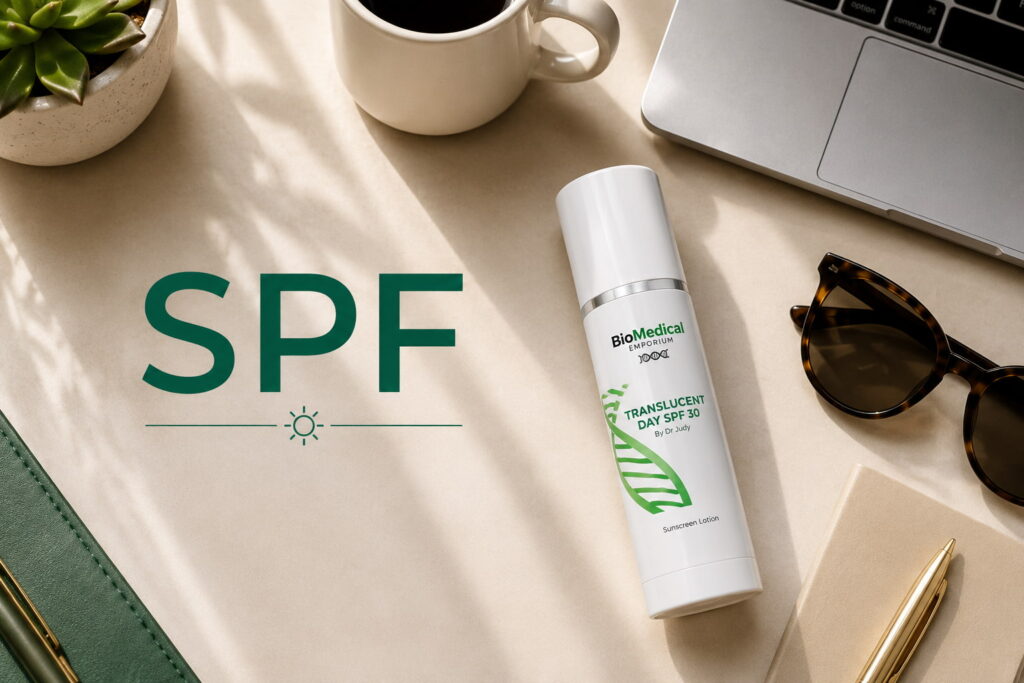
A lightweight formulation like BioMedical Emporium’s Translucent Day Cream SPF30 makes this process easier because it supports hydration while reinforcing UV protection without feeling heavy on the skin.
Perfection isn’t the goal; you just need to reduce the gap between exposure and protection.
Protection Works Better When It’s Supported Properly
SPF is one layer of protection, but the skin also benefits from antioxidant support beneath it.
Environmental exposure contributes to oxidative stress that weakens collagen and accelerates visible aging. Pairing antioxidants with your SPF helps neutralise these unstable molecules before they contribute to deeper skin damage.
Using a formulation like BioMedical Emporium’s Vitamin C Concentrate underneath SPF helps to reinforce the skin’s defence against daily environmental stress while supporting brightness and collagen stability over time.
This layered approach reflects how modern skin care products in South Africa are evolving. Not just around isolated products, but also around systems that support the skin continuously.
Supporting Skin Recovery After Daily Exposure
Even with good SPF habits, skin still experiences daily environmental stress. This is where your evening repair routine becomes important.
Night-time routines help support recovery processes already taking place within the skin. Targeted formulations like Dark Spot Serum can help address a visible uneven tone caused by cumulative UV exposure, while treatments focused on hydration and barrier reinforcement support long-term resilience.
Consistent hydration also matters as part of the PM routine. A treatment like BioMedical Emporium’s HA Contour Masque helps maintain dermal hydration levels while supporting the skin barrier when repair takes place after prolonged environmental exposure.
Skin Protection Isn’t a Single Step in the Routine: It is the Routine
Modern exposure is ongoing. The skin moves between environments all day long and experiences sunlight through windows, indoor lighting (both natural and artificial), pollution, temperature shifts, and screen exposure, all contributing small amounts of ongoing stress.
This changes how skin protection needs to be approached. SPF isn’t simply a once-off “morning step.” It becomes part of maintaining the skin’s stability throughout the day. Healthy skin isn’t protected by intention alone, but by consistency that lasts longer than the morning routine.